admin
admin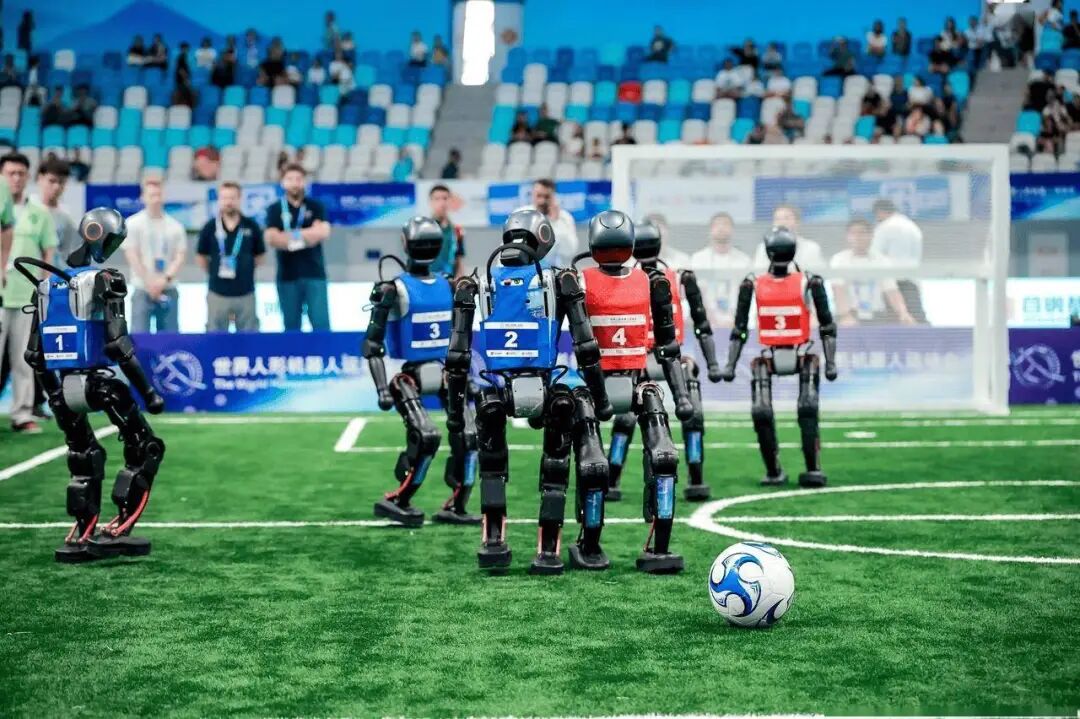
来源:钛媒体
Booster Robotics, one of China’s fastest-rising humanoid robot makers, has secured another sizable round of capital as investor enthusiasm for embodied AI continues to build.
The company has completed a new funding round exceeding $14 million, according to information obtained by the author. The round was led by IDG Capital, with E-Town Capital participating. Existing backers — including Source Code Capital, InnoAngel Fund, Shenzhen Capital Group, Bohua Capital and several government-backed funds — also followed on.
Proceeds will be used for new-generation product R&D, large-scale manufacturing, delivery expansion, and ecosystem platform development. Booster Robotics previously closed two rounds in June and July, bringing its Series A total close to $70 million. The latest financing underscores investors’ continued conviction in the company’s technological roadmap and commercial potential. Yibo Capital served as the sole financial advisor for the fifth consecutive round and will continue supporting long-term capital strategy.
The company recently launched the Booster K1, which sold out within 20 minutes of its debut under a “real delivery only” sales model. Booster’s cumulative global humanoid robot shipments have now surpassed 700 units, supplying more than 200 corporate, academic and institutional clients worldwide.
Overseas markets make up more than half of sales — a rarity in China’s humanoid robotics race, where most companies are still in pilot stages. As commercialization accelerates, Booster is leveraging its expanding production and delivery advantage to build a defensible industry position.
On October 24, Booster K1 officially launched on platforms including Taobao and Tmall, with the initial batch of fully paid orders selling out in 20 minutes. At the launch event, dealer agreements exceeded 1,000 units.
Unlike many industry peers that rely on demos and long pre-sale cycles, Booster K1 adheres strictly to “real shipments, real delivery.” The company even pledged triple compensation for Double Eleven buyers if fully paid orders are not delivered by the end of December — a sign of confidence in its supply chain readiness.
Users describe the product as “stable and durable,” attributes that have become key reasons for developers to adopt it after repeated field tests. “Reliability is one of the most important real-world requirements, and it has become our strongest engine for customer acquisition,” a spokesperson said.
To meet surging demand, Booster has upgraded its production systems, expecting annual capacity to reach tens of thousands of units next year. Prices are also expected to fall, allowing humanoid robots to penetrate mainstream markets.
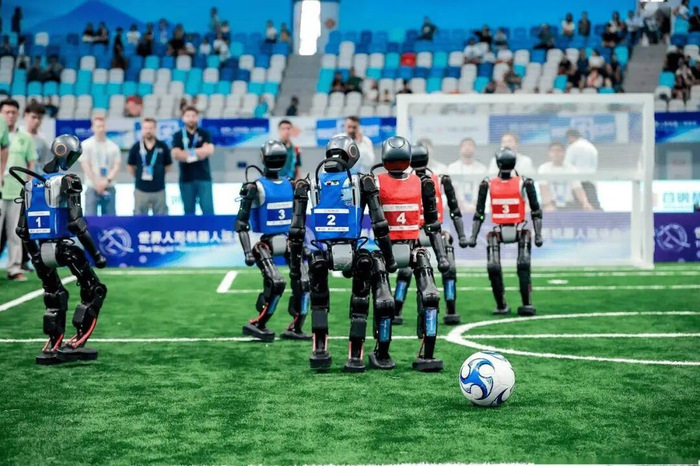
Booster’s rise is closely tied to its “single-scenario closed-loop validation” strategy. With more than 20 years of team experience, the company has embedded itself in elite robot soccer competitions — a niche but technologically demanding battleground. The Booster T1 and K1 have repeatedly won RoboCup and other world-class contests, becoming standard equipment for leading teams globally.
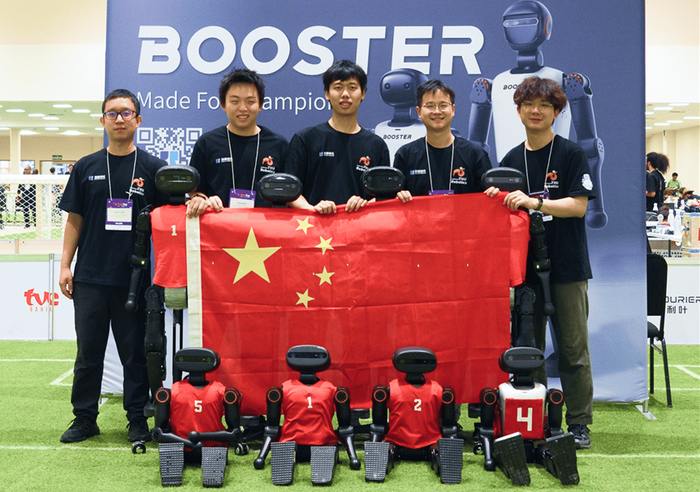
At the 2025 RoboCup World Championship, the Booster T1 helped Tsinghua University’s “Vulcan Team” win the adult humanoid champion title — the first time in the event’s 28-year history that a Chinese team captured gold in this category.
Competition serves as the starting point for R&D. Booster continuously refines perception, decision-making, control and multi-agent collaboration through high-frequency adversarial environments, and transfers these advances to broader applications. The company aims to build the “infrastructure of the AI era,” offering an open robot agent platform where developers can rapidly build embodied AI capabilities.
The Booster K1 integrates the Booster Agents ecosystem platform, supporting API-based development, open-source toolchains and no-code programming. Users can teach new robot behaviors via drag-and-drop or demonstration-based learning, lowering the threshold for mainstream adoption in education and business environments.
“AI development shouldn’t be exclusive to PhDs,” an executive said. “With the Booster K1, even a middle-school student can set up an environment within hours and build their first robotics application.”
A Dual Engine of Competitions + Education
Since its founding two years ago, Booster Robotics has built a commercial closed loop spanning competitions, scientific research and showcase applications. The company is now shifting toward education as a strategic growth engine.
In August, 25 Booster T1 robots performed at the opening ceremony of the World Humanoid Robot Games — the world’s first autonomous humanoid robot formation displayed live on stage.
Booster has established deep partnerships with RoboCup, the World Humanoid Robot Games, the China Robot Competition and its own RoBoLeague, enabling diversified revenue across hardware sales and competition operations. The company plans to further expand its competition ecosystem by offering specialized development tools and simulation platforms.
In academia, Booster collaborates with more than 20 top universities, including Berkeley and Stanford, and has contributed to multiple high-impact research papers. Its newly launched “One Hundred Cities, Ten Thousand Schools”initiative aims to partner with over 1,000 universities, 2,000 vocational colleges and 7,000 primary and secondary schools globally within three years — providing full-chain solutions spanning lab construction, curriculum development and teacher training.
With competition validation, research collaboration, education outreach and developer ecosystem growth reinforcing one another, Booster Robotics is transitioning from a robotics manufacturer into a platform-level ecosystem builder. The company aims to make humanoid robots as accessible and reliable as personal computers, driving global adoption as embodied intelligence enters its breakout phase.
特别声明:以上内容仅代表作者本人的观点或立场,不代表新浪财经头条的观点或立场。如因作品内容、版权或其他问题需要与新浪财经头条联系的,请于上述内容发布后的30天内进行。
https://finance.sina.com.cn/cj/2025-11-17/doc-infxstsc5563692.shtml